
Reporting on the Minneapolis ICE shooting, BBC News is soaked to the skin but still not sure if it's raining...
In an attempt to maintain balance, the BBC is letting obvious lies go unchallenged.
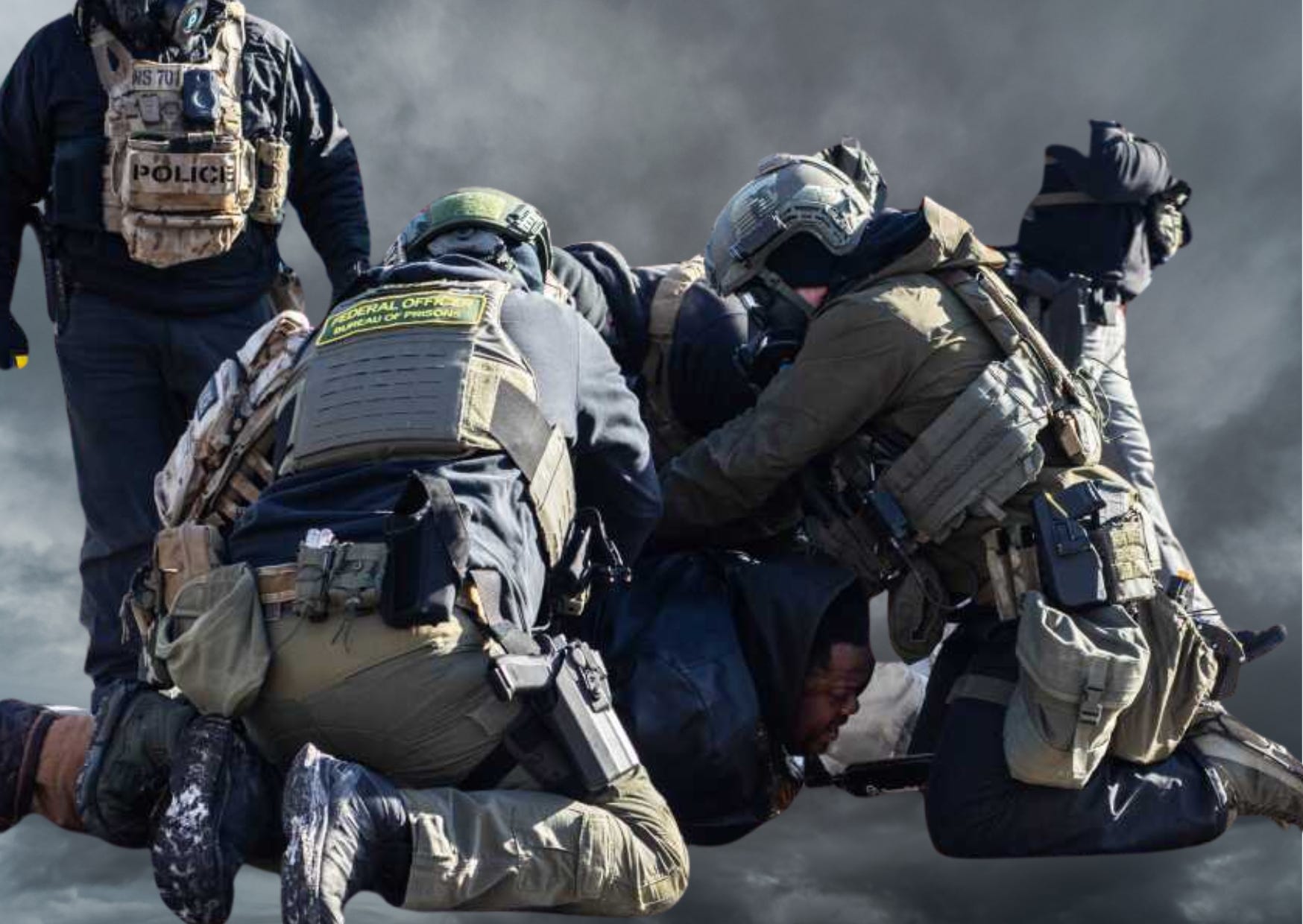
Quotations from Orwell’s Nineteen Eighty-Four are painfully overused, but sometimes it’s unavoidable. In the aftermath of the latest ICE shooting in Minneapolis, the line, “The Party told you to reject the evidence of your eyes and ears. It was their final, most essential command”, appeared across social media.
If you were reading and watching BBC News coverage of the events, it was hard not to conclude that the broadcaster was doing a poor job of clearly reflecting the evidence for your eyes and ears provided by the video of 37-year-old nurse Alex Pretti being fatally shot in the street by ICE agents.
On the day that the shooting took place, BBC News’ North American Correspondent, David Willis, wrote under the headline Shooting today again becomes a subject of sharply contradictory narratives:
As with the death of Renee Good earlier this month, this latest incident involving federal agents on the streets of Minneapolis is the subject of sharply contradictory narratives.
City leaders spoke of six masked agents pummelling a local man before shooting him multiple times and leaving him dead on the street.
Homeland Security officials maintain the man approached them brandishing a semi-automatic handgun, and that a border patrol agent fired in self-defence after attempts to disarm the man had failed. They said the victim was planning a ‘massacre’ of local law enforcement agents.
Willis’ analysis concluded with a sentence that began “whatever the circumstances surrounding today’s fatality…” as if there weren’t video footage that shows exactly what happened. The desire for balance had led BBC News to give obvious lies equal weight with observable facts.
The piece by Willis was published in the BBC News website’s live coverage of the events in Minneapolis, hours after Border Patrol commander Greg Bovino had used a press conference to claim that Peretti had “violently resisted” and caused an agent to “[fear] for his life”. On the BBC News Channel, that claim was immediately followed by an interview with Dr James Densley, professor of Criminology and Criminal Justice at Metro State University in Minneapolis, who said:
I feel like we’re living in an Orwellian nightmare here with the spin that has been put on this. You have a constitutional right to bear arms in the United States and you need a permit to carry in the state of Minnesota. My understanding from the briefing by the police chief of Minneapolis is that this person had a permit to carry. The fact that they were armed is no justification for the action that followed. If you watch the video, it’s reminiscent to me of the Rodney King incident where you’ve got lots of armed officers pummeling this citizen on the ground and then shooting him at point blank range and killing him in the end.
This looks like state-sponsored terrorism to anyone else objectively watching it. Then we’re hearing the federal government putting their spin on it afterwards. I’ve really worried for the state of Minnesota and the city of Minneapolis right now. It’s a powderkeg and has been for several weeks. I really fear that if there is protest, even peaceful protest, this will be spun further as insurrection — that’s the language we’re hearing from the President of the United States — which will then be ground for justification for whatever further action comes. These are troubling times and I think we have to be really clear-eyed and paying attention to the language being used and the tactics that are being used…
Densley’s comments didn’t appear in the BBC News live blog. Writing about Donald Trump’s social media posts on the day of the shooting, Bernd Debusmann Jr, did note that the President’s claims that local officials in Minnesota were covering up for ‘fraud’ were made “without providing any evidence”. But the tone of ‘he said/she said’ reporting continued throughout the day and into the next.
As I was writing this newsletter, BBC Radio Four’s Today programme repeated the Trump administration’s claim that Peretti had been “brandishing a gun”. That’s even as BBC Verify has published a frame-by-frame analysis of the shooting. Repeating clearly false statements without explicitly saying they are false isn’t balance or fairness; it is actively contributing to the deception.
When Alex Pretti’s parents released a statement calling for “the truth” to be told about what happened to their son, the BBC News live page published all of their statement except the following paragraph:
I do not throw around the ‘hero’ term lightly. However, [Alex’s] last thought and act was to protect a woman. The sickening lies told about our son by the administration are reprehensible and disgusting. Alex is clearly not holding a gun when attacked by Trump’s murdering and cowardly ICE thugs. He had his phone in his right hand, and his empty left hand is raised above his head while trying to protect the woman ICE just pushed down, all while being pepper-sprayed.
While including the parents’ final line (“Please get the truth out about our son. He was a good man.”), BBC News immediately followed it with a claim from the administration:
Homeland Security Secretary Kristi Noem has said agents “fired defensive shots” after Alex Pretti “reacted violently”.
Since we started today’s newsletter with a quote that’s become so overused as to be a cliché, we may as well drag in another. The line “if someone says it’s raining and another person says it’s dry, it’s not your job to quote them both. It’s your job to look out of the window and find out which is true” has rattled around in journalism for many decades (and probably goes back to the Texan journalist Hubert Mewhinney writing in the mid-1940s).
In the midst of a deluge, BBC News is often standing under an umbrella held by the Trump administration and casting doubt around the presence of the storm clouds. It’s not that BBC News should not report the words of the Trump administration, but that it consistently allows obvious lies to be presented as just one competing perspective rather than what they are.
While there’s an argument that the BBC, as an institution, is rattled by Trump's ongoing lawsuit against it, this kind of false balance has afflicted its news coverage for decades. In a context where lies are so constant and blatant, it cannot maintain any credibility by hewing to ‘he said/she said’ formulations. We have the evidence of our eyes and ears, and BBC News must reflect that.
Thanks for reading. Please think about sharing this edition…
… and, if you haven’t yet, consider upgrading to a paid subscription.
You can also buy a t-shirt if you’d like to make a one-off contribution and get a t-shirt. My book, Breaking: How the Media Works, When it Doesn’t, and Why it Matters, is out now.
Excellent piece (and I particularly like the line about the umbrella). The initial framing from the BBC was bad enough, but the way it turned the parents' statement into a bland, non-judgemental call for 'the truth' – which they even had the gall to stick in the website headline all day long – was utterly unforgivable.
I'm old enough to remember Johnson lying to the father of a sick child that the press wasn't observing their interaction, all in front of the media. https://www.channel4.com/news/factcheck/factcheck-qa-what-did-boris-johnson-mean-when-he-said-there-were-no-press-at-his-hospital-visit