
Moore, Moore, Moore!
Now the greedy conclusion of the Captain Tom story has been exposed, the media is conveniently forgetting its role in building up an impression of sainthood.
Previously: Farm Offensive
Look at how the newspapers describe the farmers' marches and you'll notice a very different attitude to their usual reports on protests.
Two columns by the Telegraph’s Madeline Grant show how the media shifted in its approach to the story of Captain Sir Tom Moore. Immediately after Moore died in 2021, Grant wrote, beneath the headline The memory of Captain Tom offers a ray of light amid conflicting messages, that:
While hard-bitten journalists and millions who had never met him were shedding tears at the demise of Captain Sir Tom Moore, his example proved a gift amid the conflicting messages of the press conference.

Boris, always delighted to deliver stirring news, paid tribute to the dauntless veteran for achieving “more than any centenarian in our history.”
Just over a year later, in June 2022, Grant wrote:
The collective fervour over Captain Tom Moore must rank as one of the crowning absurdities of that time. A nice old man who was fundraising for charity was turned into a secular saint – an unwitting corporate mascot for lockdown and its associated deity, the NHS. Within months the good captain had received a book deal and a knighthood... The nation, on a desperate rampage for a hero, had found one.It was not the nation that desperately rampaged in search of a hero, it was the media. Grant’s more critical take on Moore’s legacy came as the Charity Commission began investigating how his daughter and son-in-law had handled funds generated by the many projects and products that followed the old soldier’s initial walk.
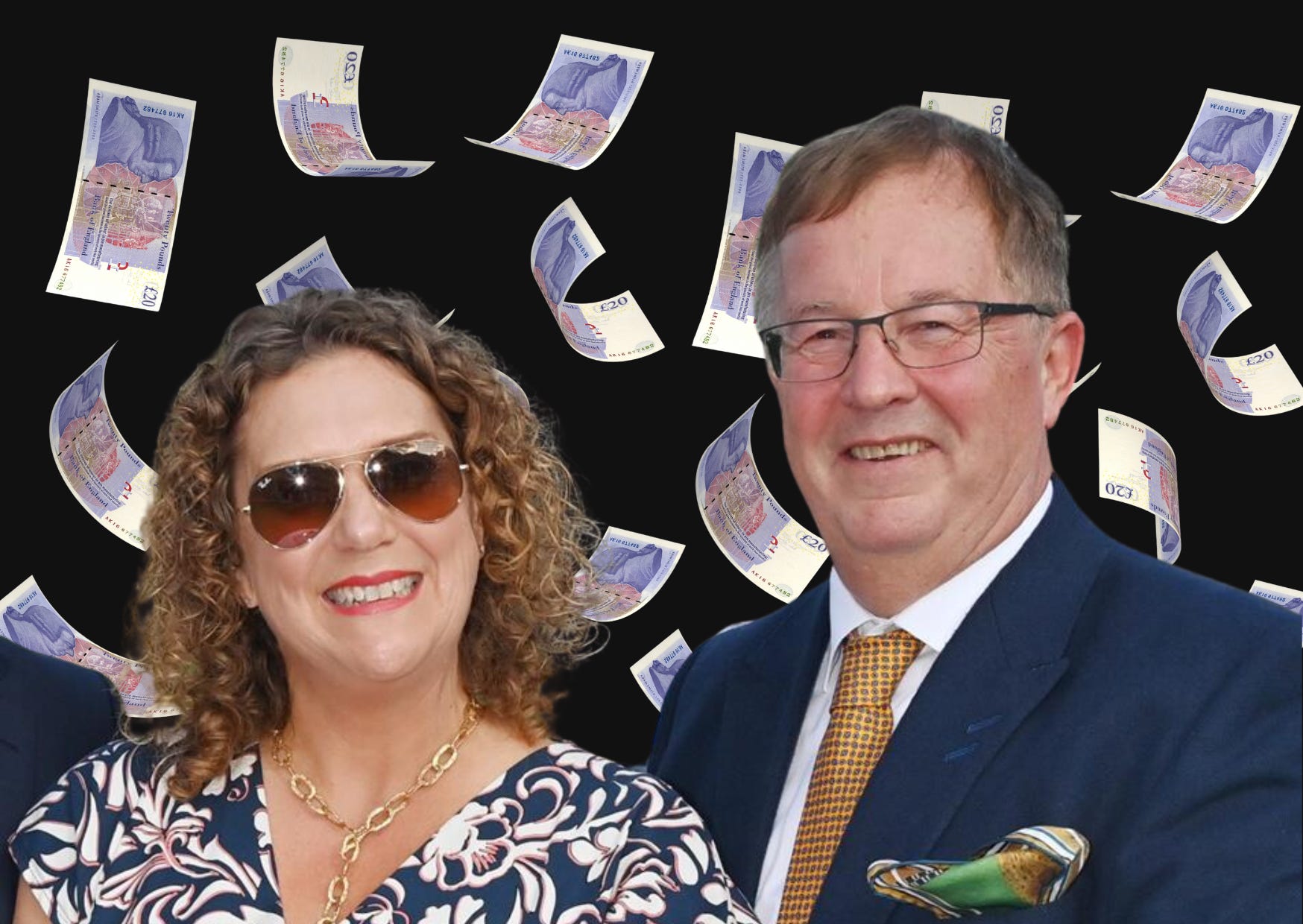
Now that Charity Commission inquiry has concluded that Hannah Ingram-Moore and her husband, Colin Ingram-Moore, benefitted personally from deals worth more than £1m and were culpable for “serious and repeated” misconduct, mismanagement and failures of integrity. The Ingram-Moores — now banned from being trustees or holding senior management positions at any charity for 10 and 8 years respectively — claim they’ve been treated “unfairly and unjustly” and subject to “selective storytelling” by the commission.
“Selective storytelling” was the problem from the start. The Captain Tom phenomenon was a triumph of PR at a time when the media was desperately hungry for feel-good stories. There was nothing organic about how those laps around the garden came to public attention. Hannah Ingram-Moore, a branding coach who’d worked with clients including Fortnum & Mason and Gap, got in touch with a PR consultant she’d been working with and asked her to send out a press release about Captain Tom’s fundraising efforts for NHS charities and a link to his JustGiving page.
From initial coverage in the local press, Captain Tom was quickly picked up by BBC Breakfast and then featured on ITV’s Good Morning Britain. There was not a drop of scepticism in the first national newspaper reports on the rush of donations that came in after those TV appearances. The Sun punned that it was a “walk of frame” and quickly got behind its columnist Piers Morgan’s call for Moore to be knighted. The Daily Mail delighted in reporting on the “WWII hero” who’d “smashed his goal”. Looking through the paper’s archive reveals that it was pumping out multiple stories a day at the height of Captain Tom Moore-mania with such vital events as Amanda Holden flirting with him on her radio show worthy of forensic attention.
In the Telegraph, a leader column argued that:
At a time when some younger celebrities are carping about the isolation or boredom, Captain Moore sets a no-nonsense tone to emulate.Moore was fast becoming framed as a kind of secular saint, rather than a long-retired, twice-married, former salesman and executive in the building supplies industry whose wartime service in India and Burma formed a small but no doubt critical part of his life. As with any saint, there needed to be relics and an avalanche of products linked to Moore — both official and unofficial — started to appear. After setting up a business, Club Nook, to handle Captain Tom’s IP, his family licensed a gin line from a distiller in Yorkshire and signed a deal for a film about him. And, of course, there were the three Captain Tom books published by Penguin Random House and his single duetting with Michael Ball.
In December 2020, Captain Tom and his family accepted an invitation from the tourist board of Barbados to holiday there over Christmas. A month after they returned, Moore was hospitalised with pneumonia and died after contracting Covid on 2 February. In the Telegraph, Judith Woods wrote that Moore “was the hero who stood up for our nation” and the Daily Mail inevitably declared him “a national treasure”.
Along with the questions around the money raised by Captain Tom’s books, the decision of the Ingram-Moores to build a spa complex in their garden, purportedly to support the charitable objectives of the foundation they set up in his name, became a focus of countless news stories. In August 2021, the Ingram-Moores were granted permission for a Captain Tom Foundation Building — having used the charity’s name without permission from its trustees. It was initially meant to be a small L-shaped building but grew into a much larger C-shaped monstrosity.
The papers that promoted Moore’s fundraising and his family’s role in it so uncritically before could not believe their luck now. They splashed on drone shots of the building work and got incendiary quotes from angry neighbours (“Give me a sledgehammer and I’ll knock the place down myself.”) Soon it was dubbed “the most controversial building in Britain”. Bedfordshire Council’s planning team ordered that the complex be demolished. It finally was in February 2024 with plenty of coverage of the process in the papers. The hunt for Britain’s next most controversial building is on.
The media isn’t responsible for the misconduct and mismanagement of money raised using Captain Tom’s name. That’s down to the Ingram-Moores. But the glee and moral cant now filling the pages of the newspapers is hard to swallow. Captain Tom was a symbol weaponised by politicians and editors a like. The high-flown language that surrounded his fundraising and death was always going to be followed by the inverse: The remaining family letting down the image. That the Ingram-Moores made it so easy doesn’t lessen that.
Please share this edition if you enjoyed it. It helps.
You can also follow me on Twitter, Threads, and BlueSky.
If you haven’t yet, please consider upgrading to a paid subscription.
It helps and allows me to spend more money on research and reporting.
Buy a t-shirt if you’d like to make a one-off contribution and get a t-shirt.
Nice round-up Mic. A rare moment of scepticism from the Torygraph via Madeline Grant. Makes a change from the incessant whingeing of Allison Pearson, notable for MMR and Covid lies and for an ugly smear against Strictly for 'normalising dwarfism', whatever that means. (By the way, are these people employed wholly and entirely for their bile, since they never write a single article, para, sentence, line or a word of any interest, note or merit whatsoever?).
Can I go one further? Maybe the old veteran was in on the scam as well.