
England in a Harry
Harry Kane saved England from an ignominious end to their World Cup campaign against DR Congo. How does that look through the prism of the sports pages?
Previously: Andy Burnham’s Time Machine
The paperback of Breaking: How the Media Works, When It Doesn’t, and Why it Matters is out on August 27. If you enjoy this newsletter, please think about pre-ordering a copy!
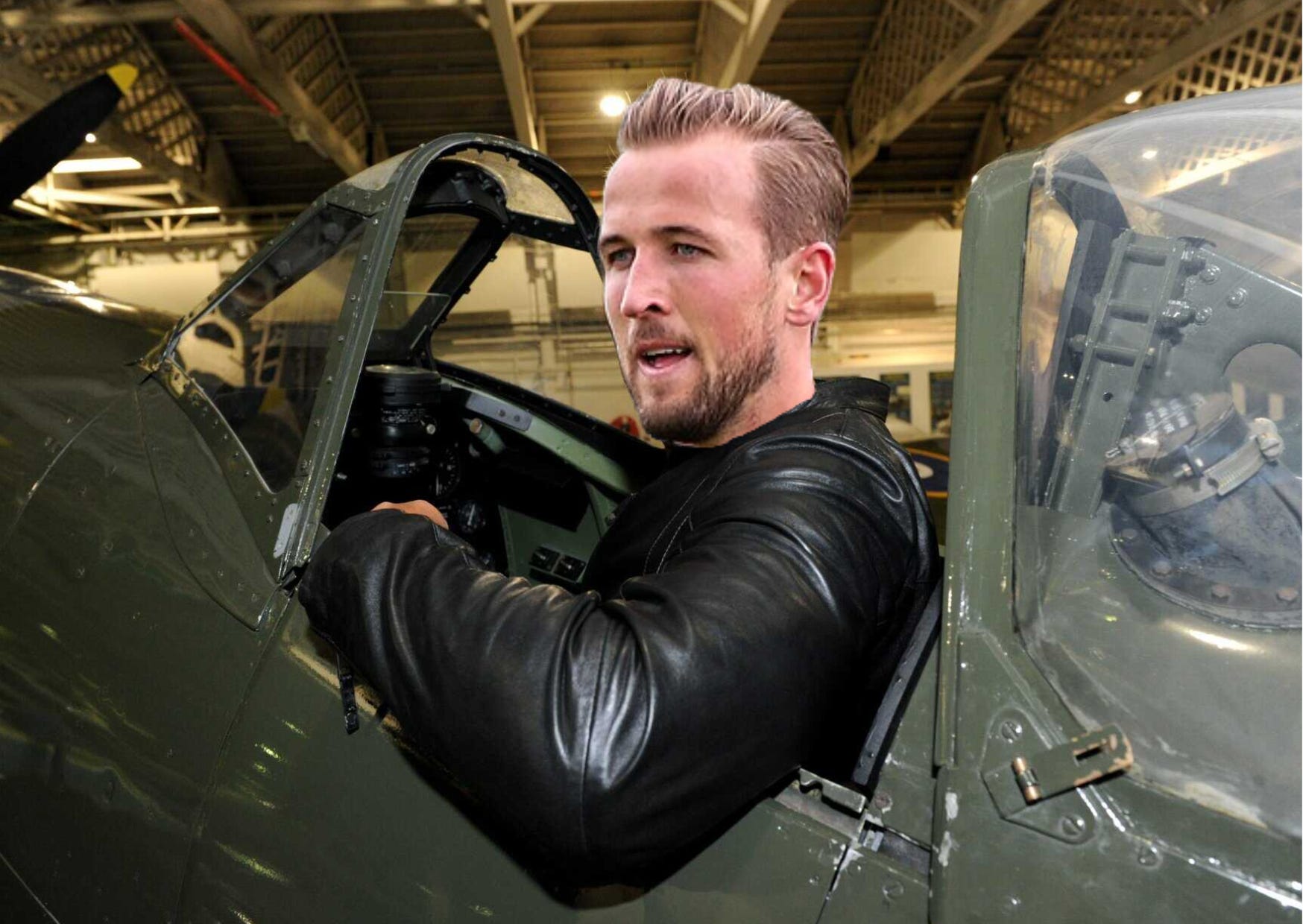
Yesterday, The New York Times described Harry Kane as “a man who looks as if he could have been ripped from the cockpit of a Spitfire during the Battle of Britain”. That sentence was filed way before England took to the pitch against DR Congo last night, but the events of that game seemed to prove its implication that Kane is the man to grab victory from the jaws of defeat. DR Congo took the lead after just seven minutes with a goal from Brian Cipenga, a striker who usually plies his trade in Spain’s second division. It wasn’t until the final 15 minutes of the game that Kane equalised with a header then swiftly followed it up with a second goal, a powerful strike that finally broke down the Congolese goalkeeper Lionel Mpasi, the second-choice goalie for the French Ligue 1 team Le Havre, who had been making brilliant saves.
There; that was my attempt at doing some football writing. It’s not easy. While this newsletter usually focuses on what appears in the front sections of newspapers, it’s sometimes worth heading to the back pages to take a look at the sport sections.
For The Sun, it’s an opportunity for an easy pun (He Kane Do It), a story built on photos of Kane kissing his wife and celebrating with his children, which also gives it a chance to stuff in photos of other WAGs, and to claim that the win represents the end to a 60-year curse:
England’s 2-1 comeback win over DR Congo in the World Cup round of 32 made history for the Three Lions. It became the first time England have come from behind in a World Cup game since 1966.
The paper’s main headline on the win is an even more painful pun (HE KANE… HE SCORED… HE CONGA’D) with the copy beneath it full to the brim with tabloidese:
Harry Kane saved England with a late double to send the Three Lions to Mexico City. But only after Thomas Tuchel’s side had stared humiliation in the face. England were just 16 minutes away from an exit that would have haunted the Three Lions for years.
Trailing to Brian Cipenga’s early strike, they were kept out by an inspired display by Congo keeper Lionel Mpasi-Nzau, who pulled off FIVE top stops
“Five top stops” is very fun to say, I have to admit.
Over at The Times — The Sun’s sibling with a more expensive thesaurus — Martin Samuel predicts a knighthood in Kane’s future and writes:
Football is played where the men are, the old soldiers say, and that is where Kane operates. In those areas where it hurts the most, where the pressure is greatest, where the physicality is constant, where bodies get battered and heads go in without fear.
That’s the kind of dramatic language you need to deploy if you’re going to turn a game of football into a stand-in for battle. Samuel is reliably entertaining writer, which is why he was such a key signing for The Times when they lured him away from the Daily Mail in late-2022. He’s there to put in a big performance during tournaments like this and his analysis of Kane is sharp:
Kane will be 33 at the end of this month. It cannot be easy, the shift he is having to put in here and it is only going to get harder in the high altitude of Mexico City and the heat and humidity of Miami if England continue to progress. Yet Kane marches on, 72 goals for the season and counting. At the end of the game he stood in the middle of the players’ circle giving an impassioned speech. “We go again,” was probably the message. It usually is. But even if Kane was a dressing-room mute he would still lead this group by example. What a player he has been for England; what a star he might yet be, at this tournament.
In The Times’ match report, its chief football correspondent Jonathan Northcroft describes Kane’s first goal with writing that manages to match the crispness of the header itself:
Kane saw everything first, moved first and as he reached the ball first, time seemed to stand still. You could see him, working out the angles, choosing his spot, deciding the exact contact he needed to make. Then the execution — a powerful yet unerringly accurate header that had Mpasi beaten at last. You just knew he wouldn’t miss.
Over at The Daily Telegraph, Jason Burt can’t resist the cliché:
The looks said it all. Every member of the England squad craning their necks, arms locked, staring intently at Harry Kane as he stood in the middle of a huddle and delivered a tub-thumping team talk. It ended with a cry of: “We go again!”
England do go again. But only just. And only because of Kane, their captain, leader, saviour and world-class striker. O Captain! My Captain!
Like Northcroft and Samuel though, Burt issues a warning about what awaits England at the Azteca stadium where they’ll play Mexico in the early hours of Monday:
The reality is England were not good enough, not organised enough and not smart enough. Except for Kane. No one can doubt what he does. How crucial he is. We can celebrate that.
Oliver Holt, the Mail’s chief sports writer, begins by writing about an England team “stalked by thoughts of the humiliation of an early exit when they had come to win the World Cup”. Quickly though, he also falls into a reverie over Kane:
Instead, well, instead, just Harry Kane. It is as simple as that, really. Sure, Jude Bellingham played like a titan again and Anthony Gordon made a big difference when he came off the bench but when a crushing 1-0 defeat was only 15 minutes away, Kane stepped up and blasted England into a Round of 16 tie against Mexico City in the mighty Azteca Stadium on Sunday evening.
Kane came to the rescue, as he so often does. He scored twice in 11 minutes. His first goal was a firm header, the space won by clever movement, that finally undid the resistance of Mpasi. The second was a bullet of a shot that not even a combination of Mpasi and England’s other old goalkeeping nemesis Jan Tomaszewski could ever have saved. It nearly burst the net.
In his conclusion, Holt also went for the dramatic, the clichéd, the pseudo-Shakespearean touch:
Kane was mobbed by his teammates, who were in awe of his finish. In the background, Bellingham fell to his knees in a gesture of thanks and relief. He spoke for a nation.
Of course, the Mail being the Mail cannot resist injecting a sour note about Kane into its coverage. Elsewhere, its football editor, Ian Ladyman, writes:
Can Kane’s legs last?
… What Tuchel must hope now is that Kane’s legs stand the pace. England will need him in the rarified atmosphere of Mexico City in the next round and that will represent a completely different test to the one England faced here.
For The Guardian, football reporter Jacob Steinberg praises Kane’s “two dead-eyed finishes” but doesn’t engage in the romanticism that has taken some of his colleagues. He writes:
A better side would have killed England off before half-time. Rice still looks unfit and the defence remains an accident waiting to happen. Spence did not look the answer at right-back but Tino Livramento has gone home, Jarell Quansah has a twisted ankle and James has tweaked a hamstring.
So much depends on Kane and Bellingham. Rashford played himself out of the team with a series of wayward crosses from the left. There were boos when one of his deliveries drifted out of play. It was time for Tuchel to work his magic. More will be required if England are to go any further.
His colleague, the paper’s chief sports writer, Barney Ronay, couldn’t resist using the latest England anthem — Wonderwall — as the hook for his opening:
Well maybe, you’re gonna be the one that saves me. On a wild, boisterous, often agonising afternoon under the giant Victorian railway dome of the Atlanta Stadium, the Democratic Republic of Harry Kane progressed to the last 16 of the World Cup.
He tempers the talk of Kane as national saviour with a touch of icy realism albeit wrapped up in more Oasis references:
The relief at the final whistle was profound for England’s players and fans as they sang together at the far end. All the roads we have to walk are winding. The lights are blinding. England made chances here, and they will cling to that. They showed real spirit to turn the game around. Above all they have Kane, a temporary fix for a great deal of wrong, but on days like this a one-man national team.
We all know how capricious the English press can be. Kane is the hero today, but will he maintain that mantle if England fail to beat Mexico on Monday? Looking at the way the international press responded to the win gives a sense of what come next.
France’s sport newspaper L’Equipe brought up memories of England’s infamous Euro 2016 defeat by Iceland, writing that “the spectre of a similar fiasco loomed large in Atlanta”. In Spain, El Mundo says of Kane as “the only one capable of maintaining the necessary composure to prevent Congo from making [England] look ridiculous”. Meanwhile the Germany broadsheet De Welt, nicknames the English captain “King Kane” and says he’s the only reason “Thomas Tuchel’s team avoided an embarrassing defeat”. For Mexico’s El Universal, Alberto Vargas writes:
The reality for the English side is that they have a squad with big names, but they haven't lived up to expectations.
Whatever the high-temperature, high-altitude reality of playing at the Azteca, you can be certain that the English press’ expectations will be over-heated across the next few days. For all their attempts at realism and focusing on performance stats, football writers are still susceptible to that particular fan affliction — the mad triumph of hope over experience.
Thanks for reading. Please think about sharing this edition…
… and, if you haven’t yet, consider upgrading to a paid subscription.
You can also buy a t-shirt if you’d like to make a one-off contribution and get a t-shirt. My book, Breaking: How the Media Works, When it Doesn’t, and Why it Matters, is out now.
It will be interesting to see whether the press employ lazy national stereotypes of the Mexican opposition in their coverage of the run up to the next game. They usually do, the deeper England go into World Cup tournaments.
Wrap him in bubble wrap